Sale!

Cervico Essential Mold

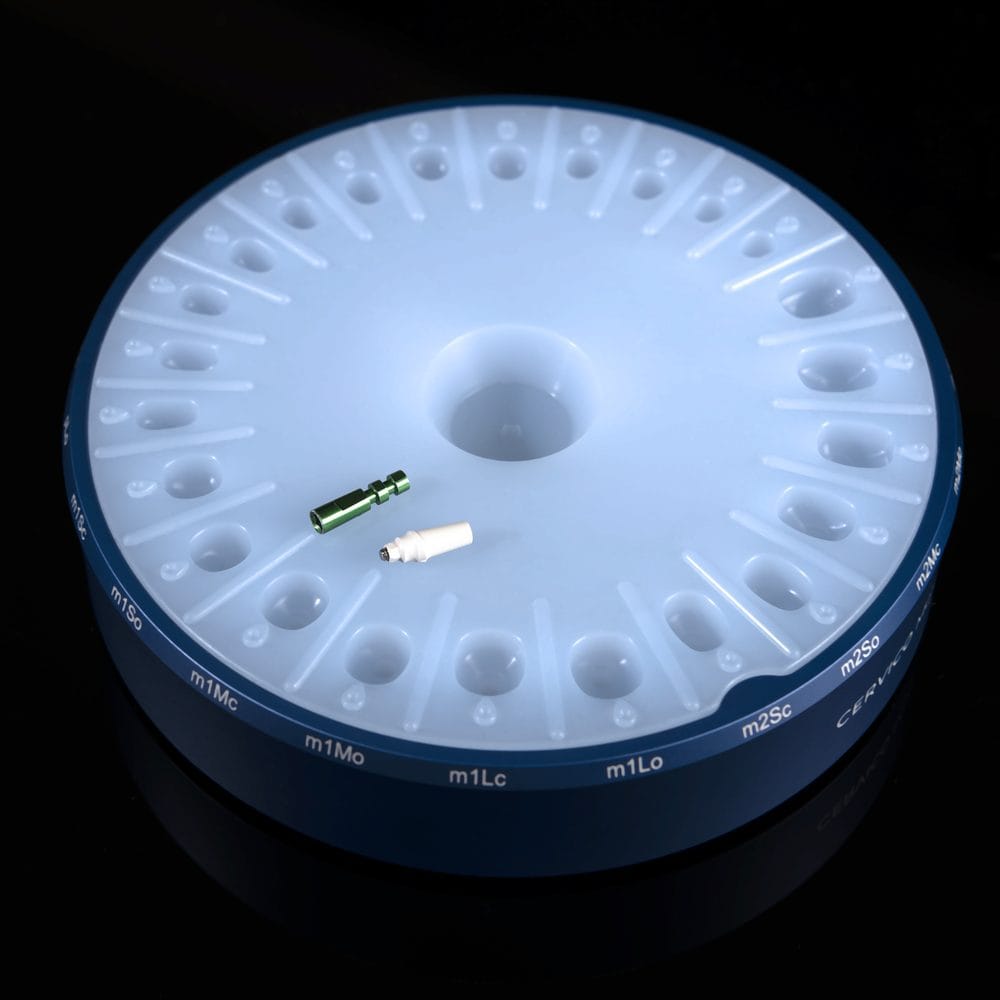
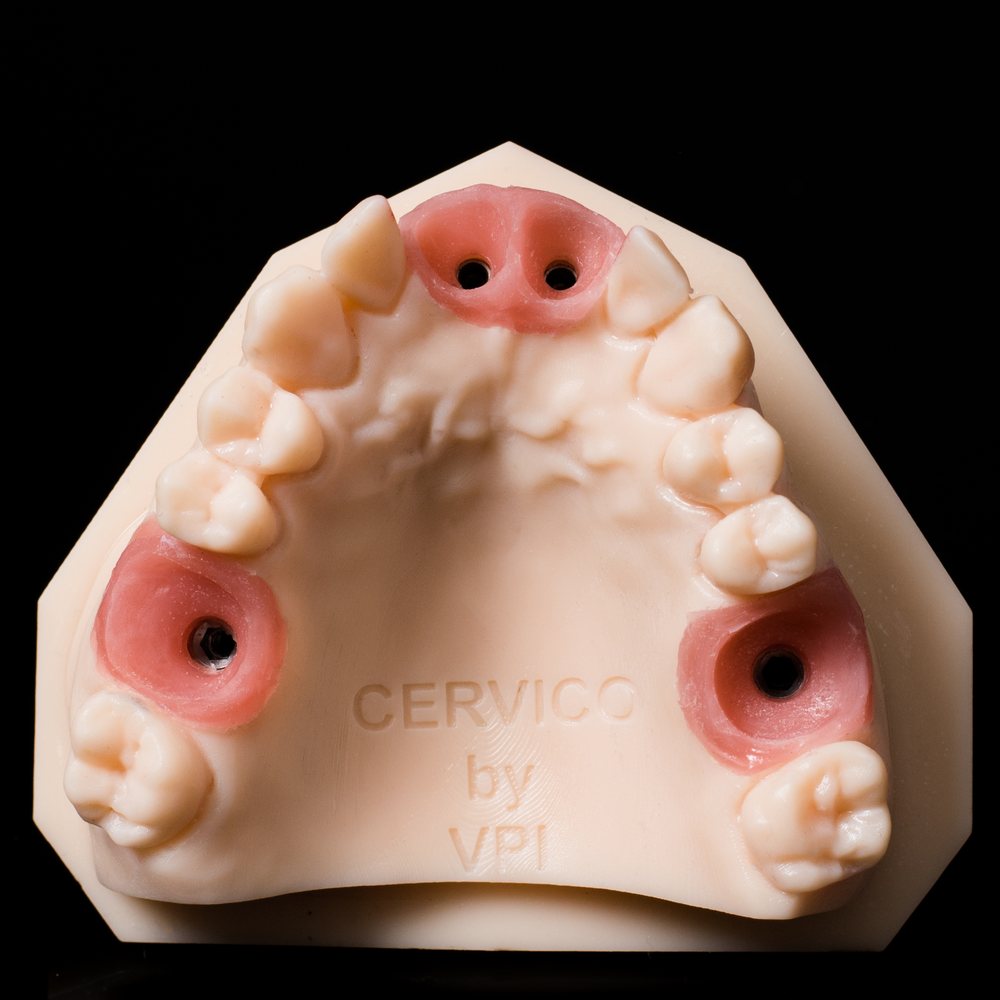
The chairside mold for custom anatomical healing abutments that works with all implant systems through their stock analogs.

Requires:
  • Stock lab analog (from your implant system)
  • Temporary abutment (from your implant system)

Original price was: €999.00.Current price is: €899.10.

Using analog impressions? See the Premium Kit

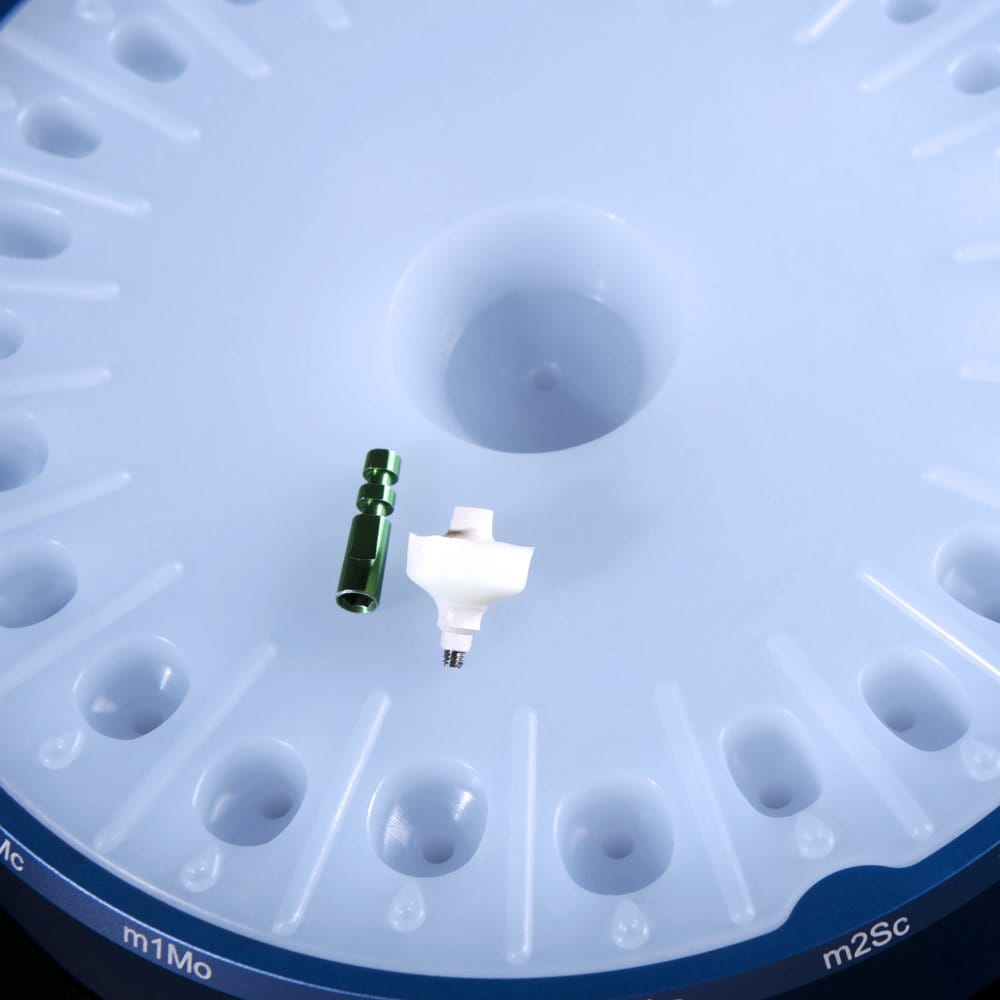
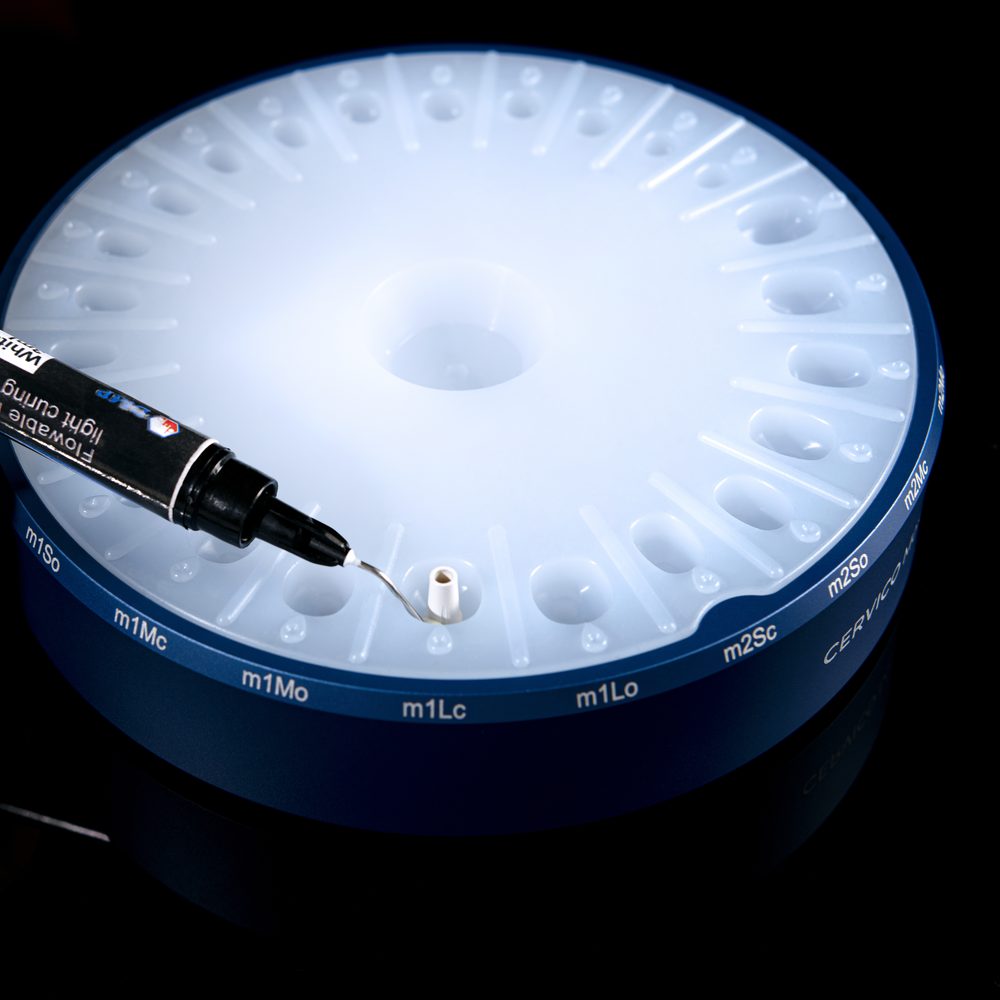
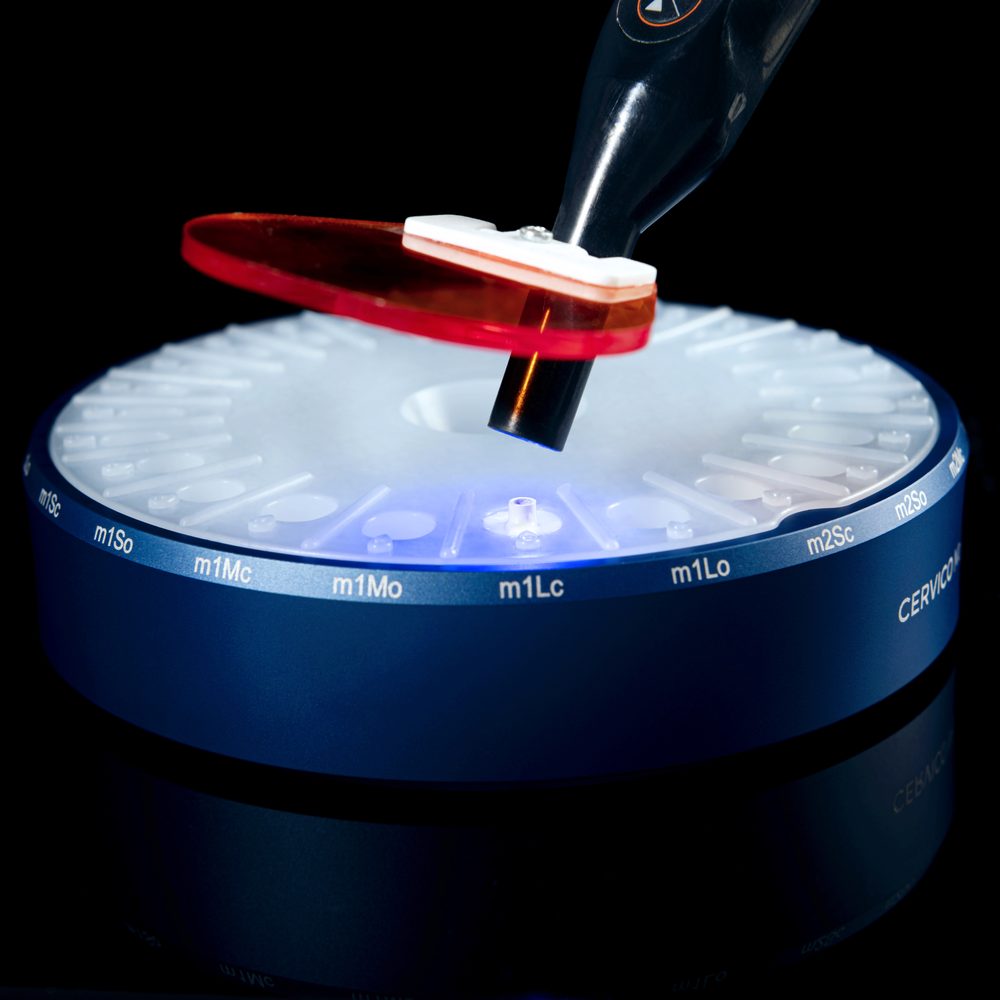
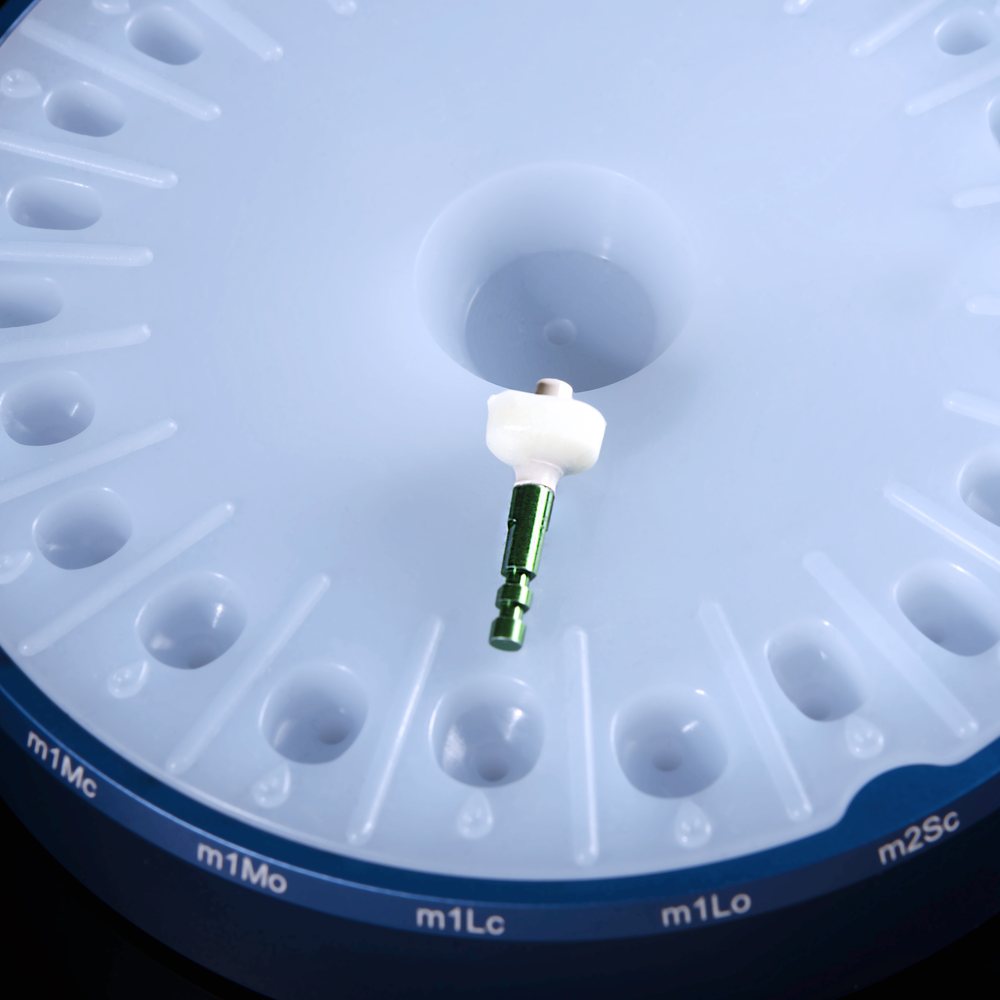
Connect a temporary abutment to your stock lab analog and push it into the well for your tooth group and size. Turn it until its buccal reference meets the “tear” mark on the front of the well. Fill with flowable composite, light cure, unscrew, polish and deliver. Centered and off-centered shapes are in the same mold.

Watch the full workflow →

Made in the EU · ISO 13485 · Compliant with U.S. and Canadian medical device requirements.

SKU: 5213006651779 Category: Brand:
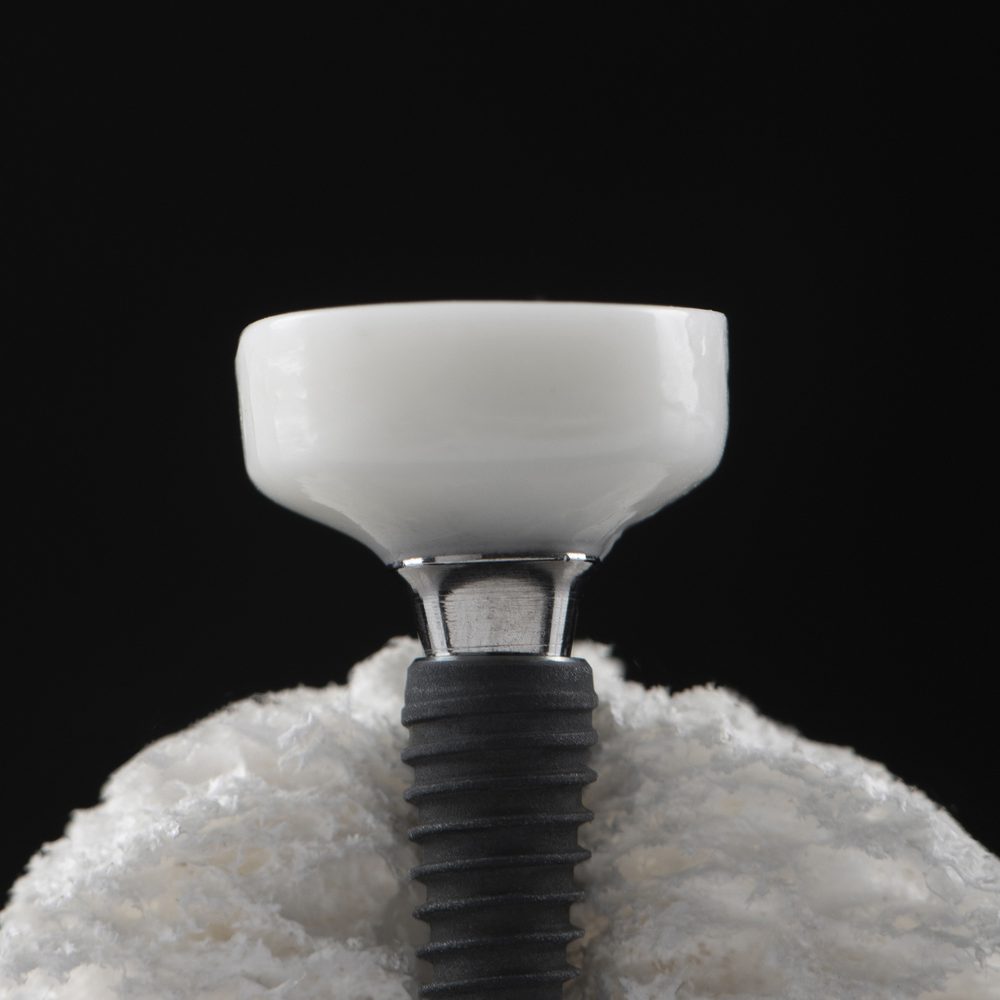
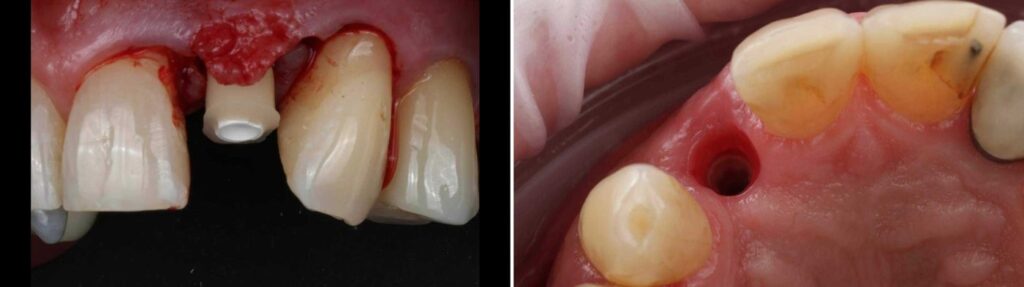
Custom healing abutment at 22 and the shaped emergence profile on removal

A zirconia implant at 22, healed into the profile the abutment gave it.

The implant's PEEK temporary, built out with composite in the matching well and secured at second stage (left). On removal, the emergence profile is ready for the digital impression and the final crown (right).

Dr. Alessandro Perucchi and Dr. Cristian Scognamiglio · Neodent Z zirconia · Read the case

Cervico in peer-reviewed case reports: Medicina (2023), Journal of Clinical and Experimental Dentistry (2024), Clinical and Experimental Dental Research (2025) and Cureus (2025, three-year follow-up). All cases

Why the shape matters

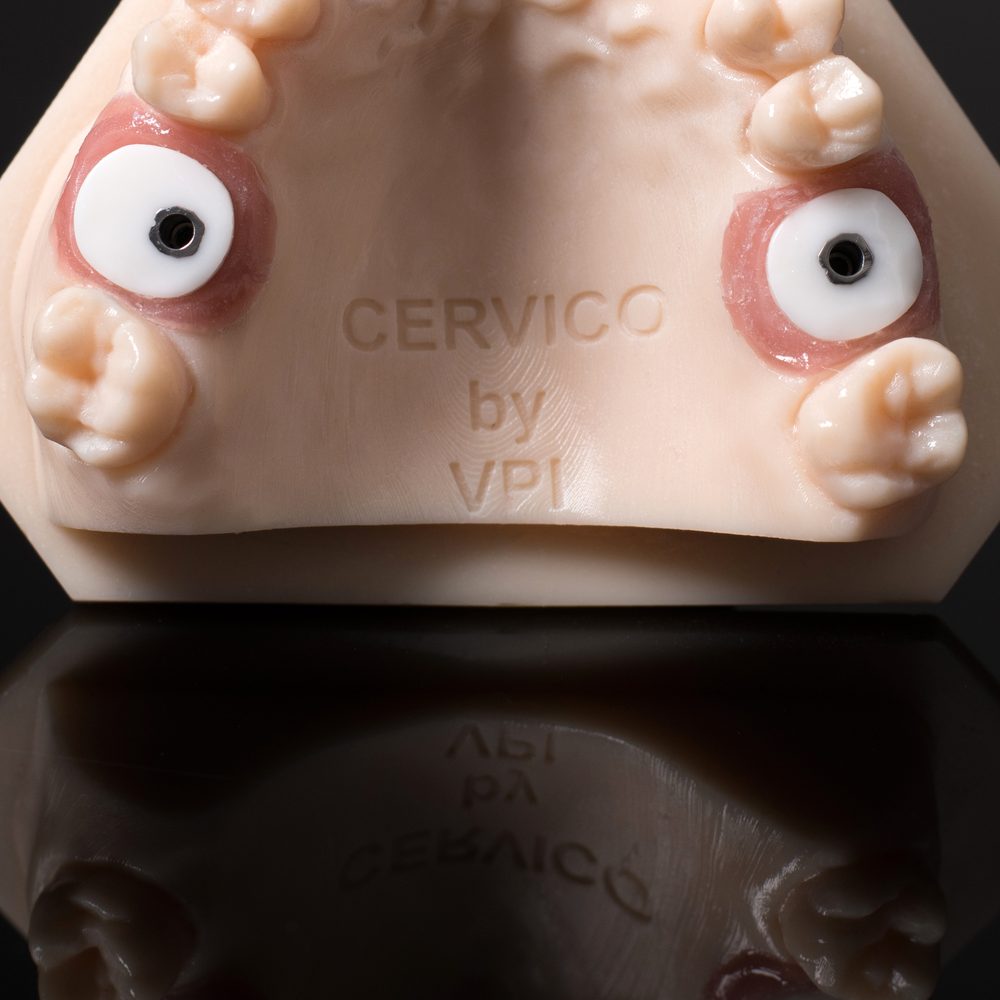
Soft tissue heals into the shape of whatever it heals against. A round stock healing abutment leaves a round collar of gum, and the final crown, which is not round, then has to be pushed through that collar or sit over it.

Cervico moves this decision to the day of surgery, while the tissue can still be shaped. Each anatomical shape of our patented Cervico System has the shape of the natural tooth at the gum line, in three sizes for each tooth group. The gum heals around it, so at the impression it already has the contour of the final crown.

How the custom healing abutment mold works

Connect a temporary abutment to your stock lab analog, push it into the desired well, and rotate the assembly until the buccal reference on the abutment aligns with the “tear” mark on the front of the well. Fill with flowable composite, light cure, unscrew, polish, and deliver.

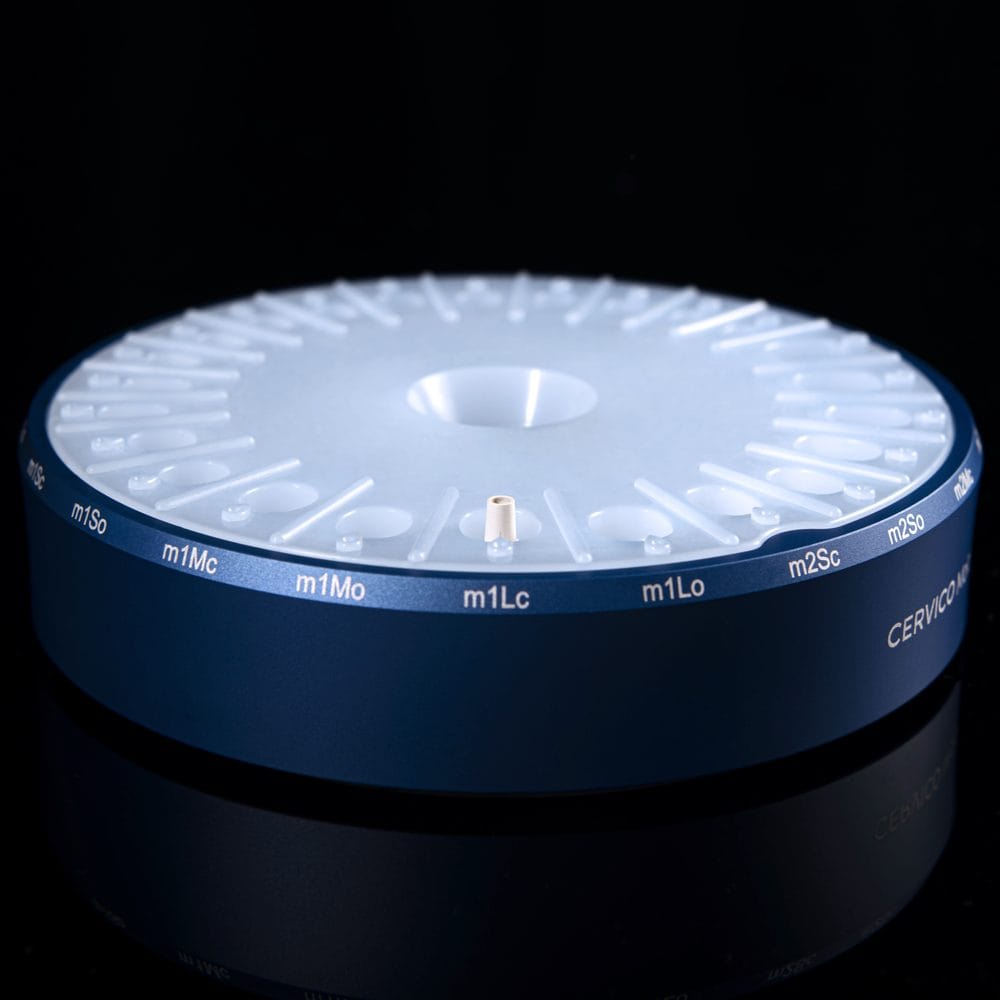
The mold’s silicone insert contains 24 anatomical wells covering four tooth groups (a: anteriors, p: premolars, m1: lower molars, m2: upper molars), each available in three sizes (S, M, L) and two symmetry options: centered for cases where the implant sits under the planned restoration, and off-centered for cases where it does not. Each well features a “tear” extrusion on its front surface that marks the buccal position, ensuring the abutment shape corresponds to the implant’s prosthetic connection orientation.

Construction and compliance

The Essential Mold is a Class I medical device built for repeated clinical use. A medical-grade aluminum base holds the silicone insert in position, and the whole assembly is autoclaved at 134°C / 273°F between cases. It is manufactured in the EU under ISO 13485 and complies with U.S. and Canadian medical device requirements. With proper maintenance, the mold has no use limit.

Selecting the well

Used standalone, the Essential Mold lets you select the appropriate well visually based on your clinical judgement of the edentulous space and tooth group. For accurate cervical profile selection, mesio-distal space evaluation, and verified osteotomy positioning, the Mold can be paired with the Cervico Guide, whose tab codes map directly to the wells in this Mold. The Mold also pairs with intra-oral scanners: the custom healing abutment shapes the soft tissue while the scanner captures the final emergence profile.

ComponentSpecification
Mold materialMedical-grade aluminum base + silicone insert
Anatomical wells24 wells (4 tooth groups in S/M/L, centered and off-centered)
Buccal orientationManual alignment via "tear" reference mark on each well
ImpressionBest paired with an intra-oral scanner
CompatibilityAll implant systems via their stock lab analogs
Pairs withCervico Guide (available as a bundle) for accurate profile selection
SterilizationAutoclave at 134°C / 273°F
CompositeAny flowable composite (we recommend Nanohybrid flowable composite)
ReusableYes, unlimited uses with proper maintenance

What dentists ask before ordering

Does it work with my implant system?

Yes, through the stock lab analog for your platform. The abutment is built on your implant company's own temporary abutment, so the connection stays theirs. Write to us to confirm your combination.

Do I need the Guide?

No. Used on its own you choose the well by eye. With the Guide you also evaluate the space, centre the osteotomy and choose the profile in the mouth; its tab codes match the wells.

Is composite safe against the soft tissue?

Polished composite healing abutments and provisionals have been used and documented for years. The tissue side must be highly polished and free of unpolymerised resin. Why composite

Why not build the healing abutment directly in the socket?

Resin cured in an open, grafted socket puts uncured material and curing heat against the wound, and it can lock into graft particles. The shape it takes is a copy of the socket, defects included. In the Mold the abutment is cured, polished and disinfected outside the mouth, and its shape is an anatomical profile chosen for that tooth.

How do I disinfect the finished abutment?

Polish it smooth and remove all debris, then disinfect or sterilise it the way you would any implant abutment before it goes in the mouth. Instructions for use

How long does the Mold last, and how do I sterilise it?

It is a Class I medical device built for repeated clinical use. A medical-grade aluminum base holds the silicone insert in position, and the whole assembly is autoclaved at 134°C between cases. With proper maintenance it has no use limit.

Does it work with intra-oral scanners?

Yes. The custom healing abutment shapes the soft tissue and the scanner captures the final emergence profile.