Why Composite
The abutment adapts to your clinical scenario - not the other way around.
Titanium and zirconia healing abutments are fixed shapes. You can’t adjust them chairside. Cervico abutments are composite, which means you can add to them, reshape them, and refine them in the mouth until they fit the situation in front of you.
Pre-fabricated abutments are a compromise
And yet, with titanium or zirconia healing abutments, you’re choosing from a fixed set of shapes and hoping one of them fits. If the contour doesn’t match the tissue architecture, you have two options: accept the compromise, or don’t place the abutment at all.
You can’t add material to a titanium abutment to fill a gap. You can’t reduce one to accommodate thin tissue. You can’t reshape zirconia chairside to follow an irregular ridge. These are finished products. What you get out of the packaging is what the patient gets.
Composite changes that equation entirely.
Titanium & Zirconia
Fixed at the factory
The shape is final before it reaches your hands. No chairside modification is possible without compromising the material
- Cannot add material to fill gaps or undercuts
- Cannot reduce or re-contour at the chair
- Limited to manufacturer's shape library
- Cannot accommodate surgical protocols like socket shield or CTG
- No pathway from healing abutment to provisional restoration
- Each placement depth requires a separate SKU
Cervico with Composite
Modifiable at the chair
The shape starts anatomical and adapts to the clinical reality in front of you. Add, reduce, reshape, without removing the abutment from the workflow.
- Add composite to fill gaps or build up deficient areas
- Reduce and re-contour with a bur chairside
- Adapt subgingival shape to any surgical protocol
- Convert the healing abutment into a temporary prosthesis
- One system covers crestal to 3mm subcrestal placement
- Re-modify at follow-up as tissue responds
Where modifiability changes the outcome
Every implant case presents variables a pre-fabricated abutment can’t anticipate. Here’s where composite gives you options that titanium never could.

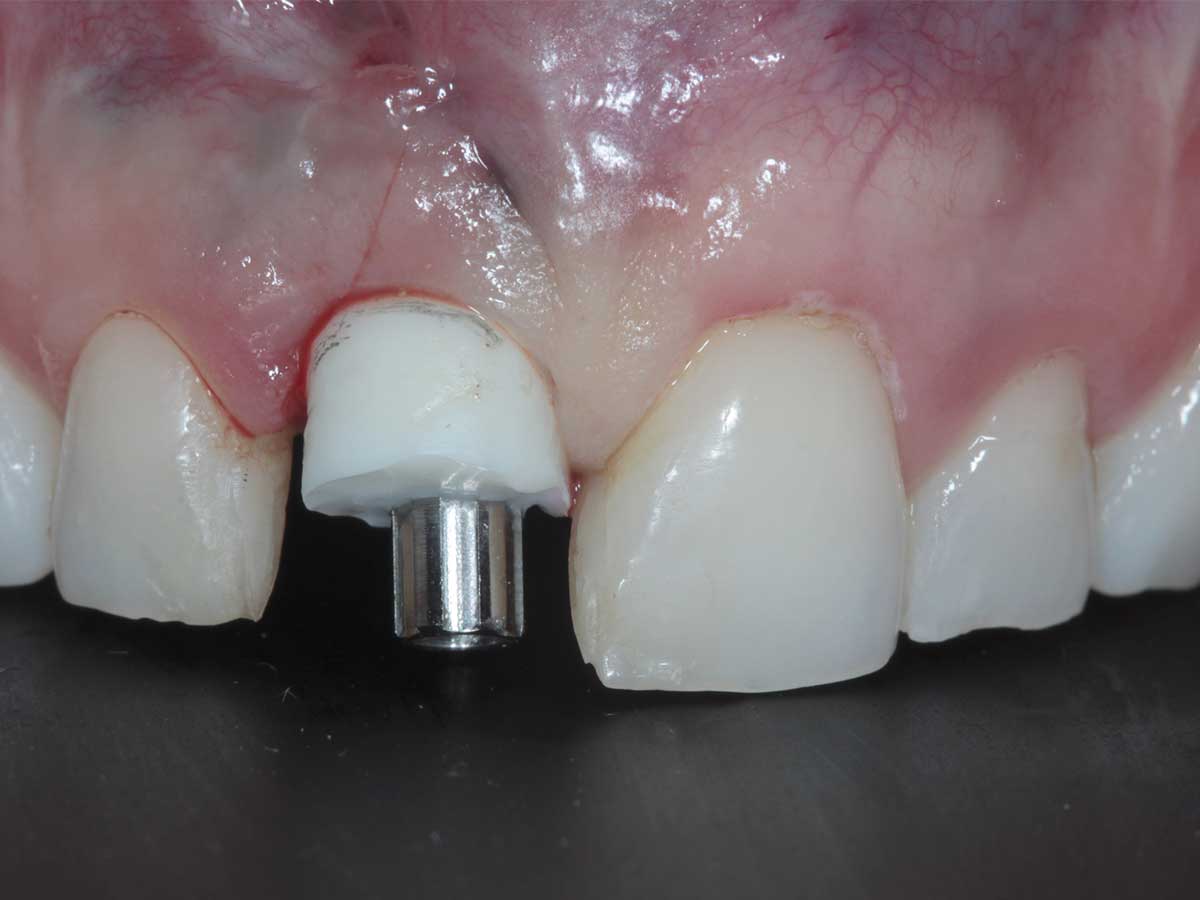

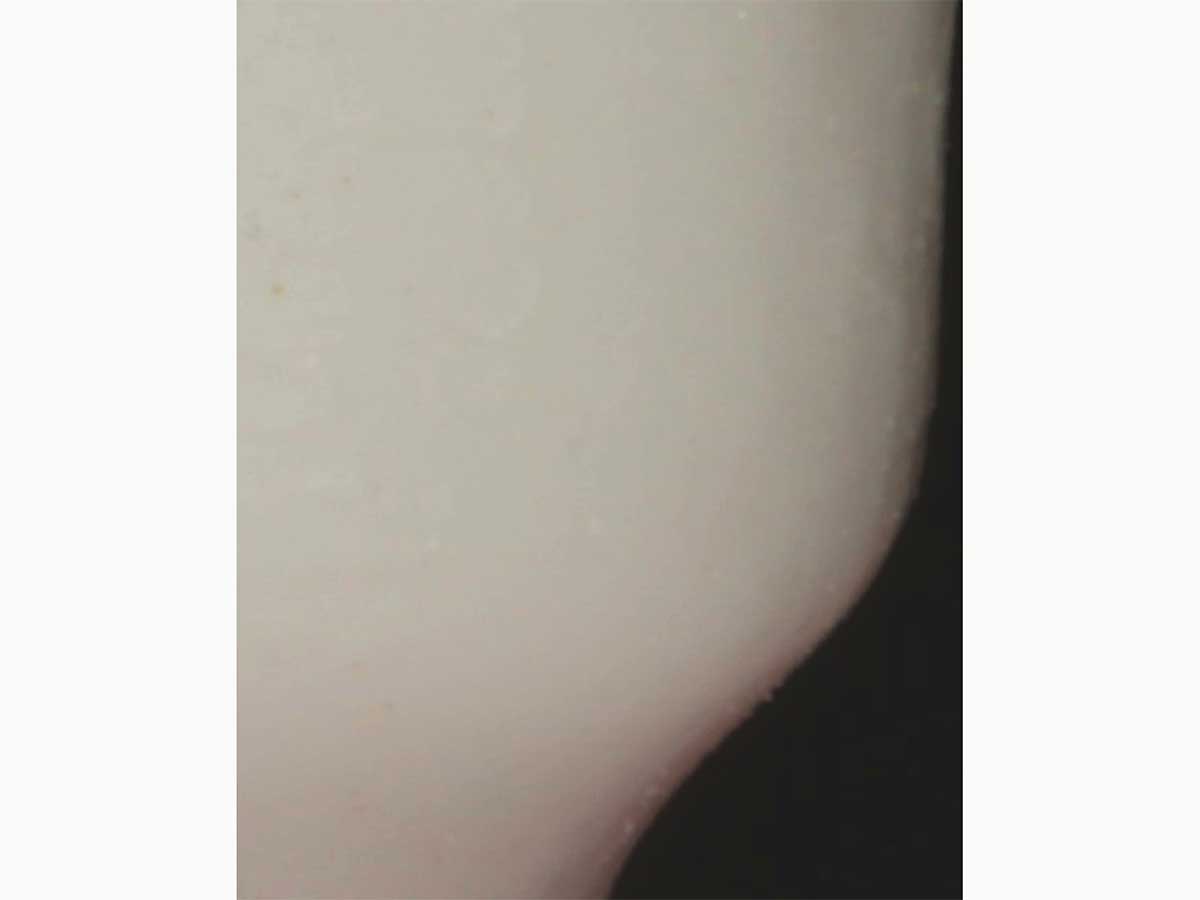

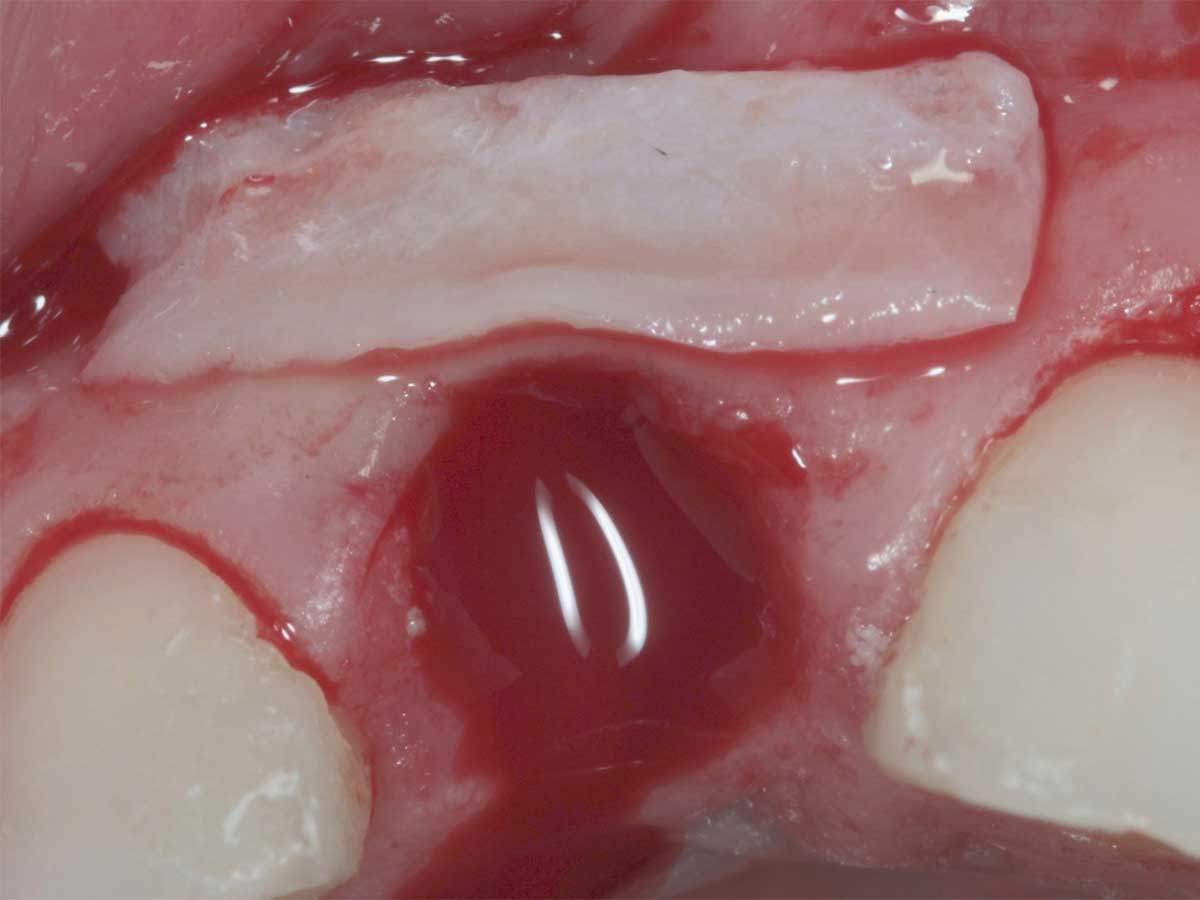

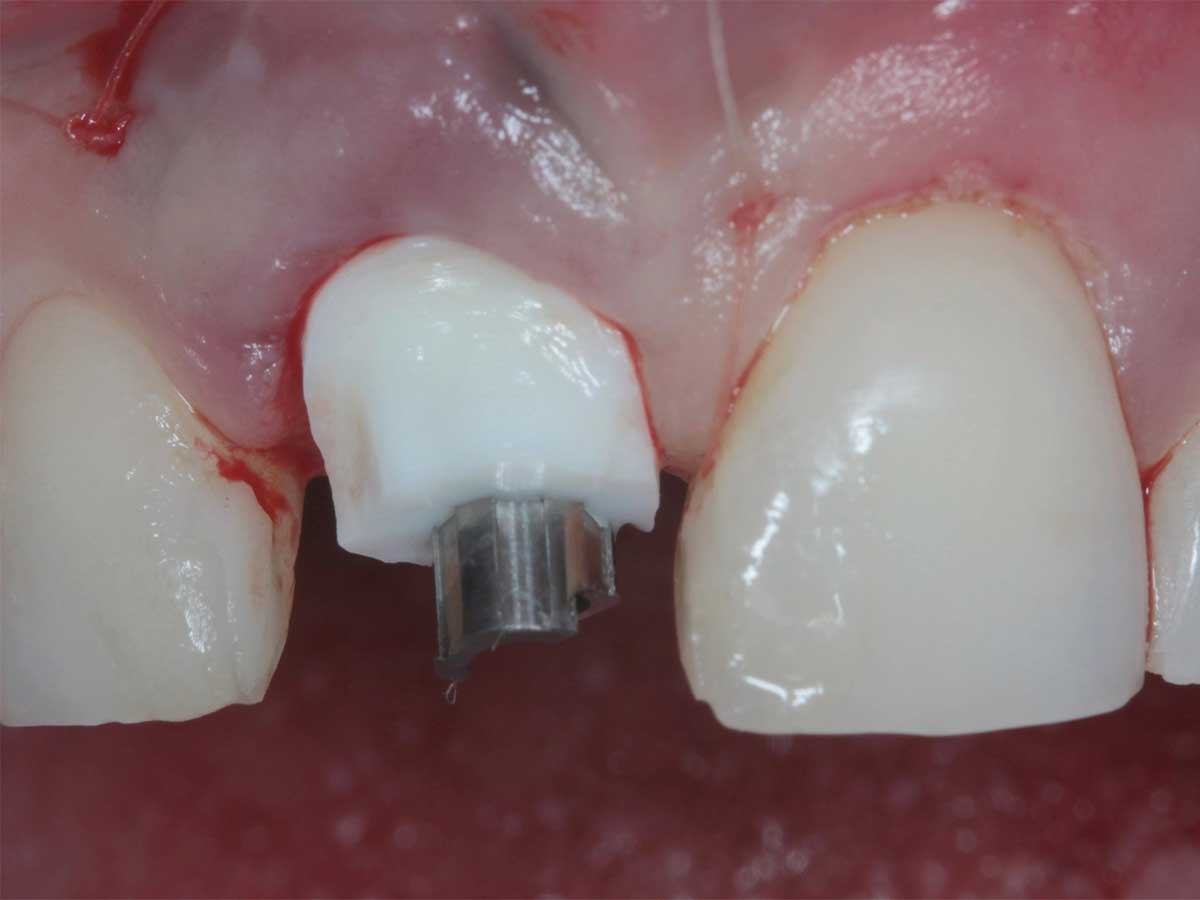
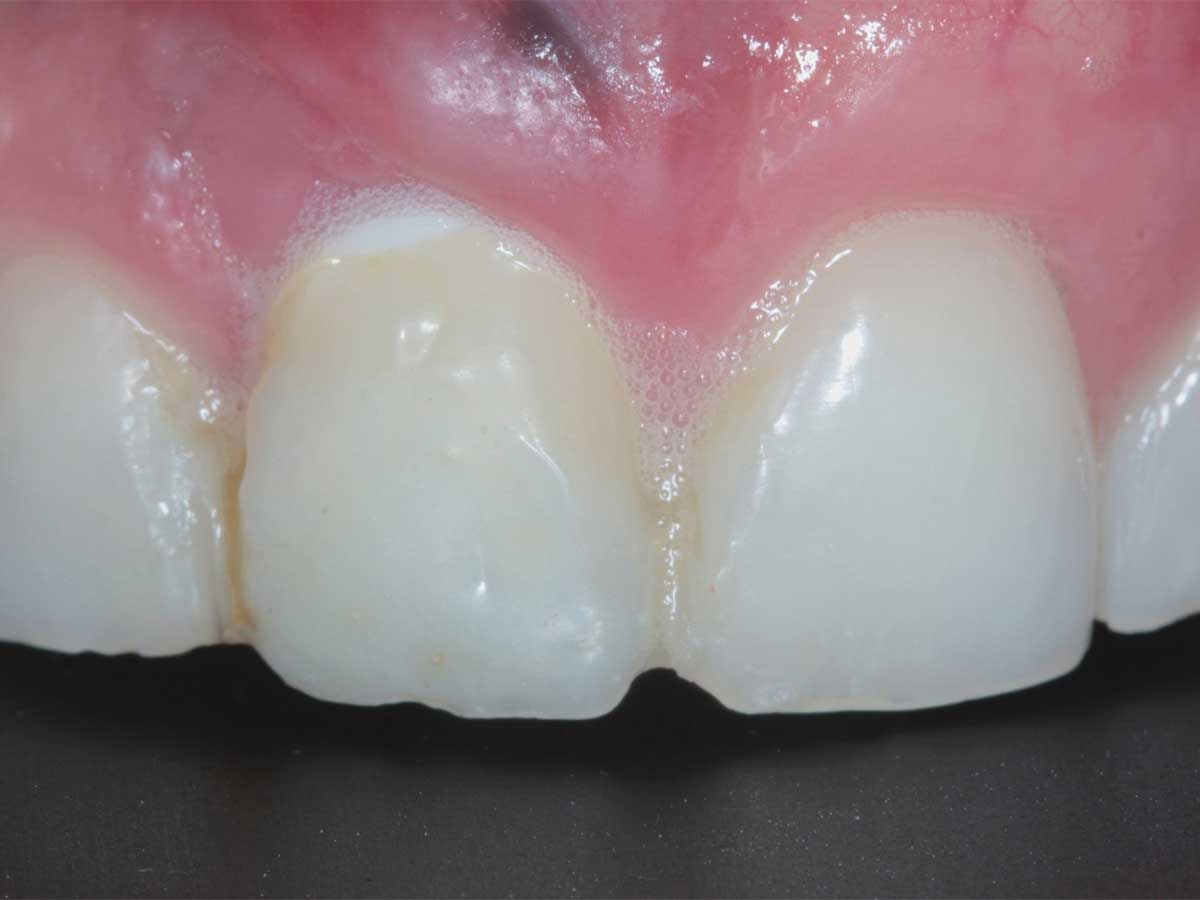
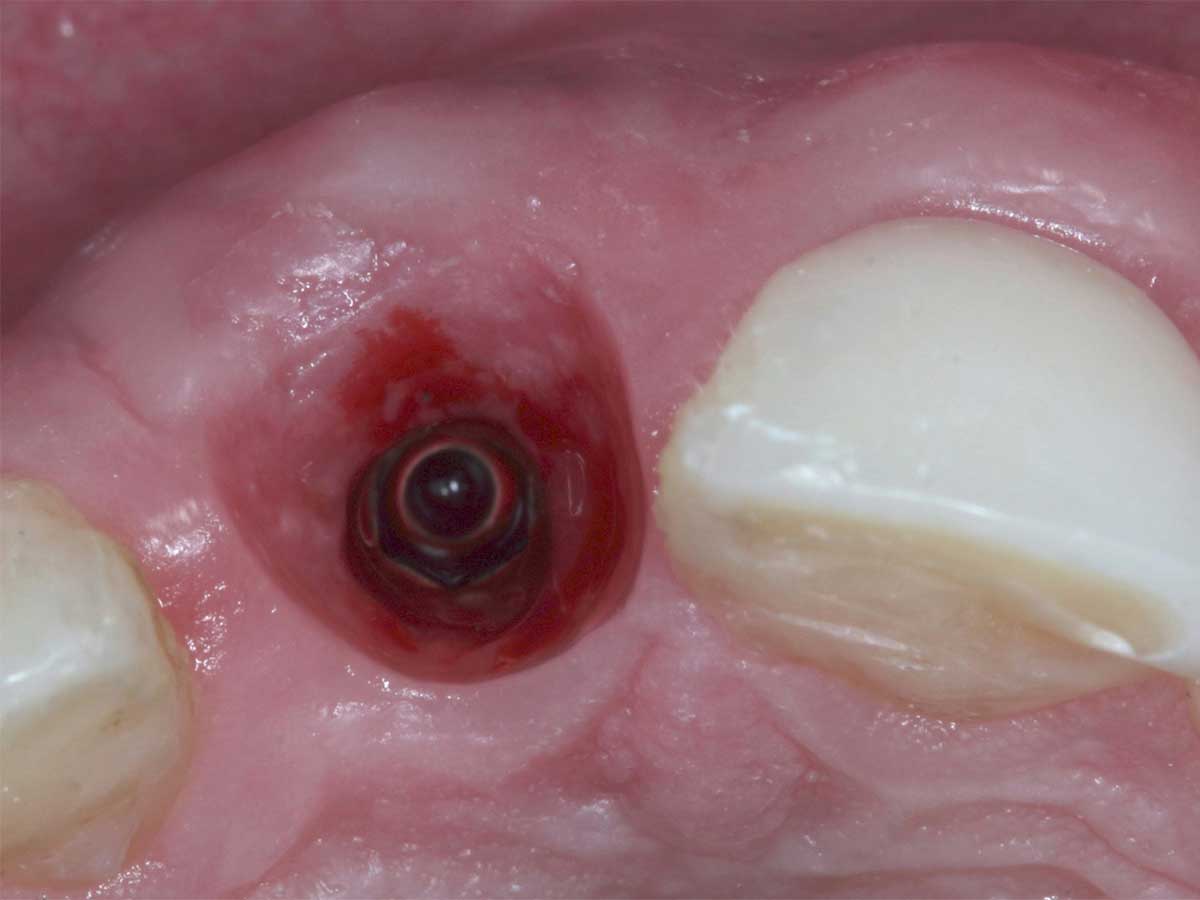
Adapting subgingival shape for connective tissue graft
A pre-fabricated abutment has a convex or straight emergence. It pushes against the graft rather than giving it room.
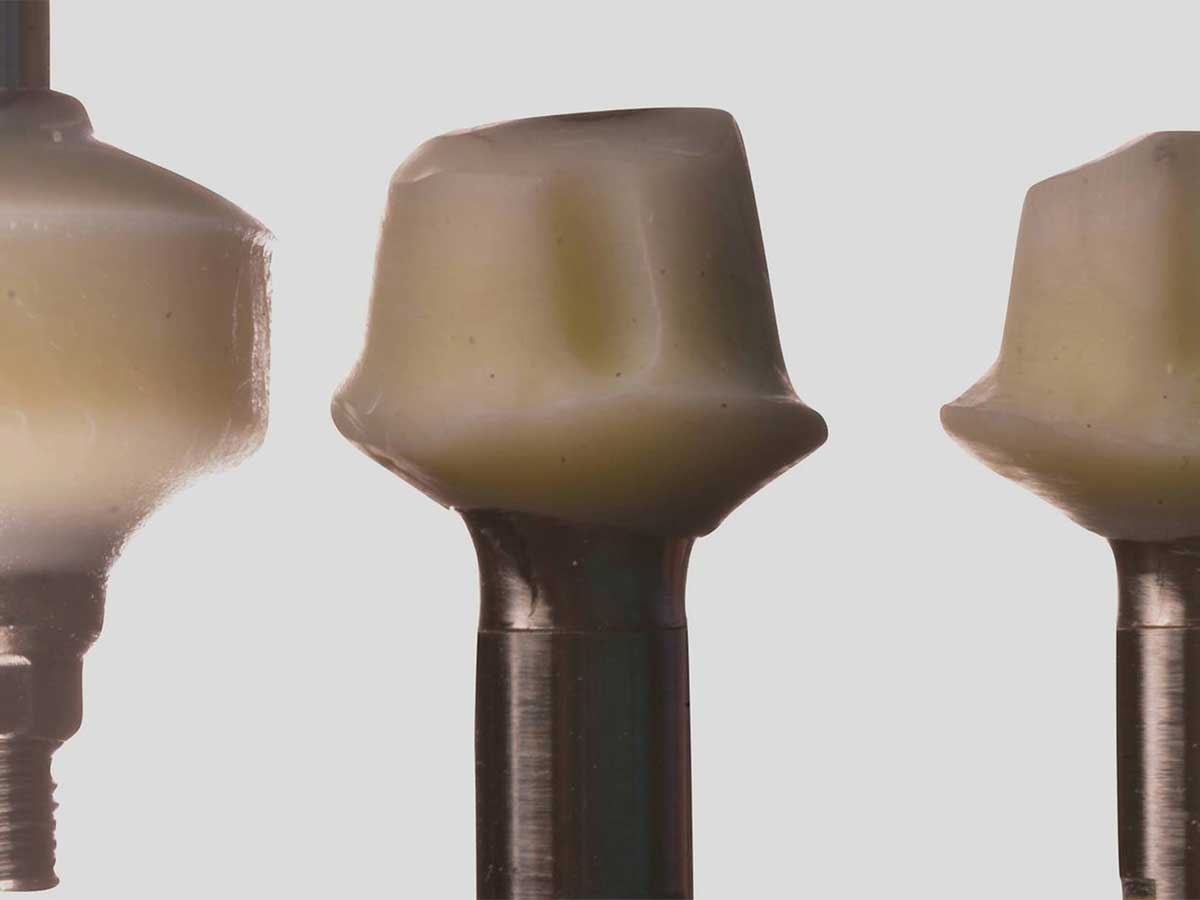
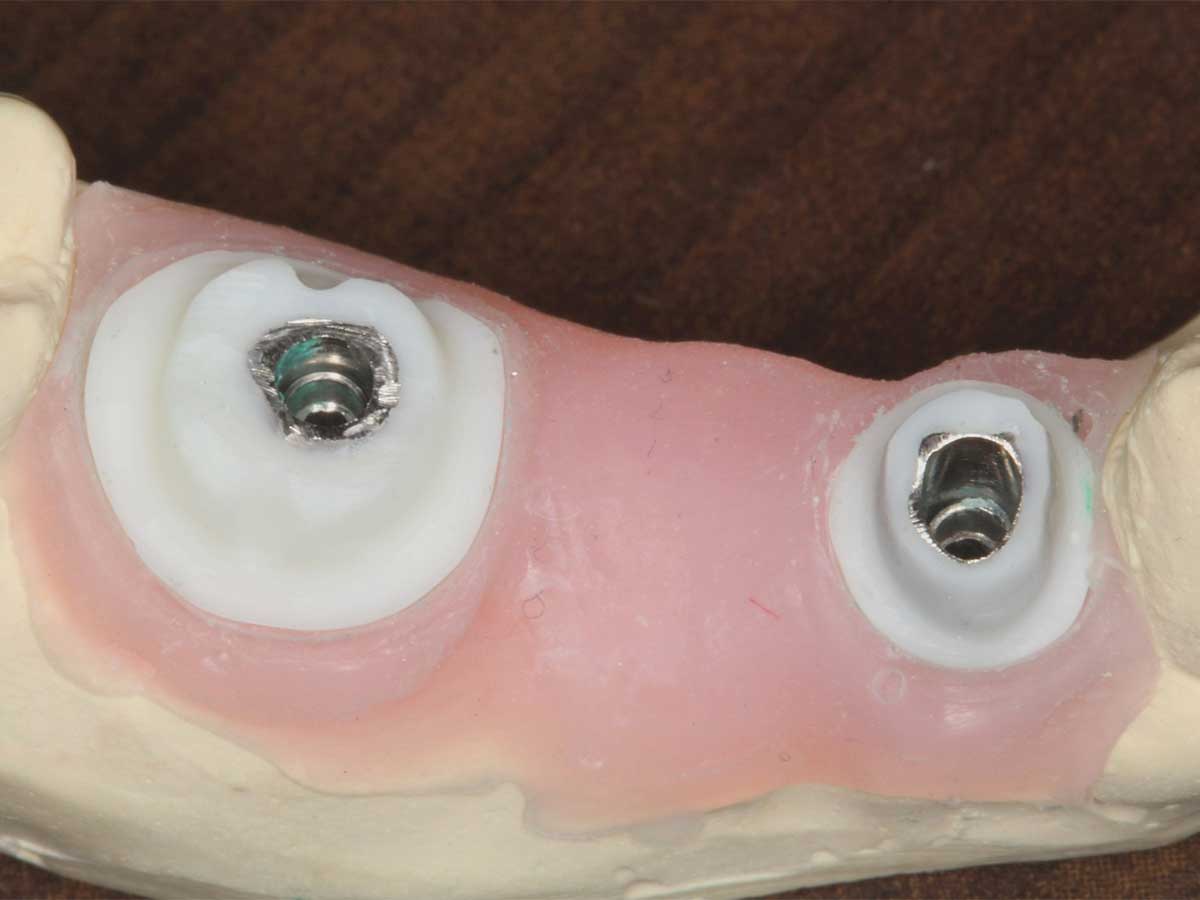
With Cervico: Modify the healing abutment to a concave subgingival shape, creating the space the connective tissue graft needs to integrate. This can be done chairside at the time of surgery — something that’s impossible with pre-fabricated healers.
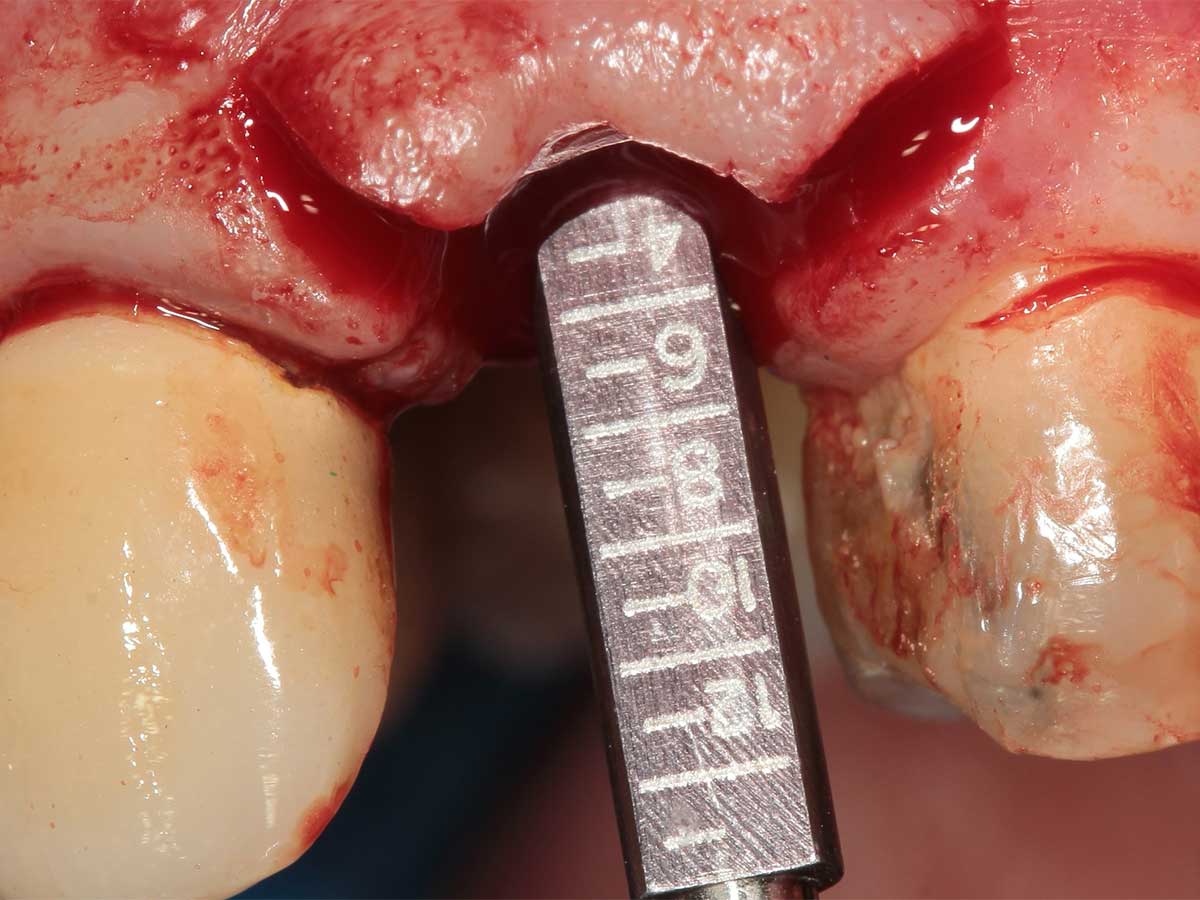

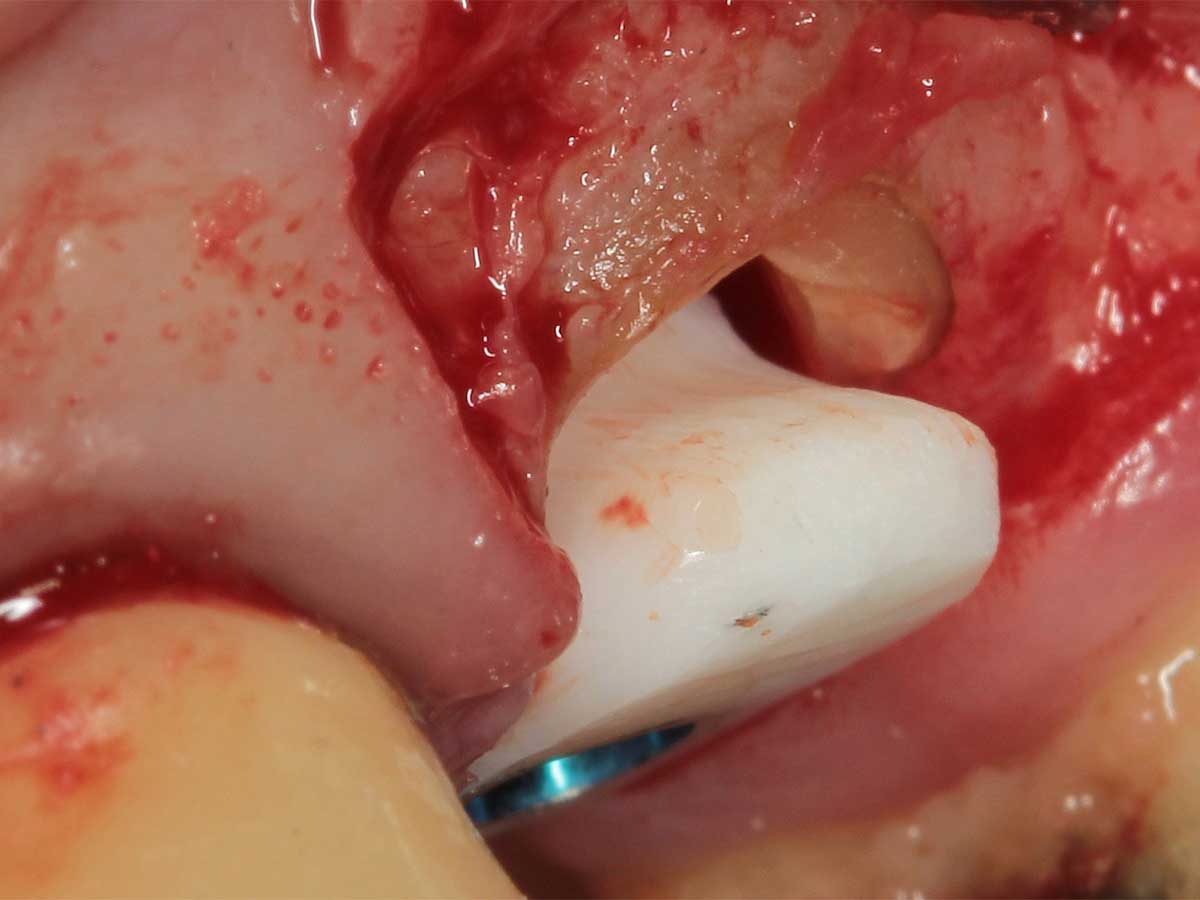
Socket shield protocols
A cylindrical titanium abutment ignores the shield entirely. It either impinges on it or leaves a gap.
With Cervico: Reshape the subgingival contour to work around the socket shield. Reduce the buccal aspect where the shield sits, and build up where soft tissue support is needed. The abutment adapts to the protocol – not the other way around.

Direct conversion to a temporary prosthesis
Sometimes you need more than a healing abutment — you need the patient to leave with a provisional restoration. With fixed-material healers, that means a separate abutment, a separate workflow, and separate components.
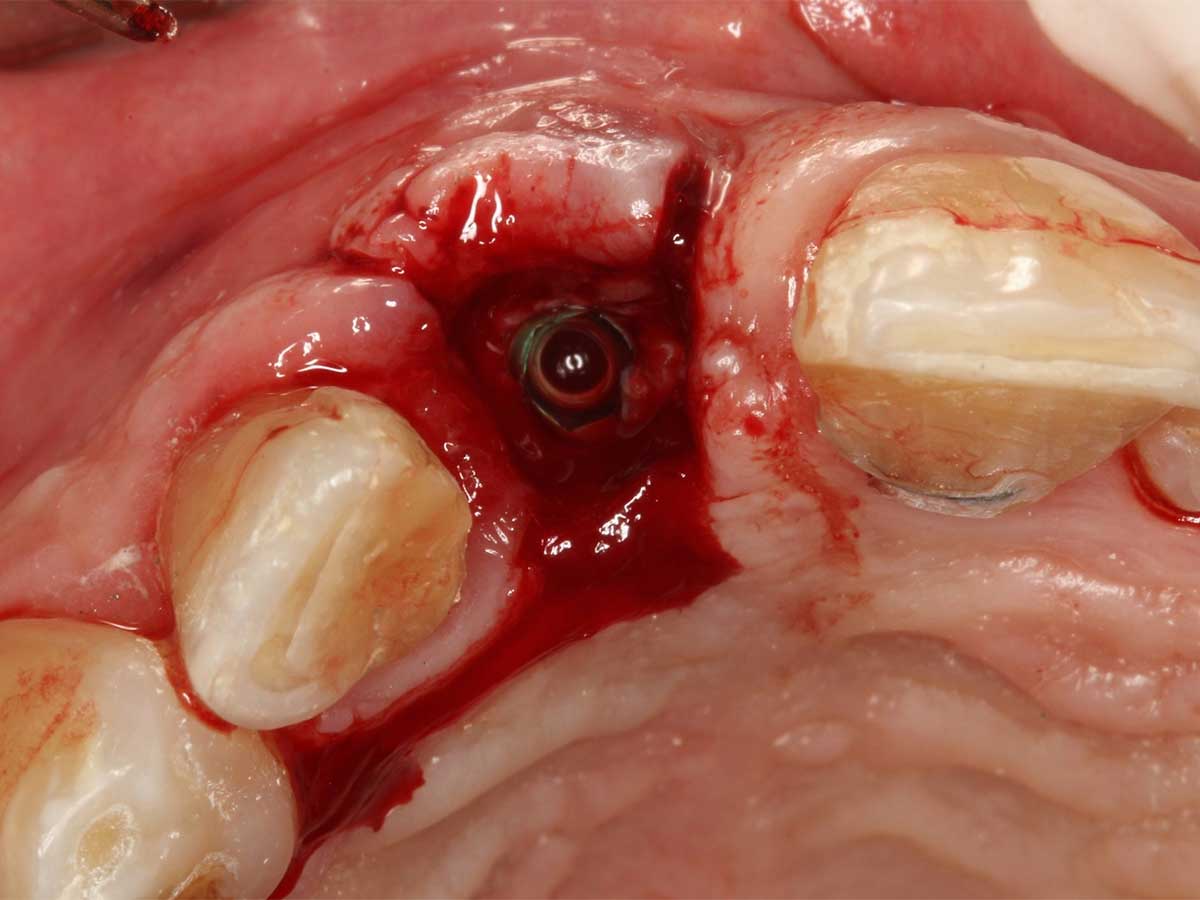
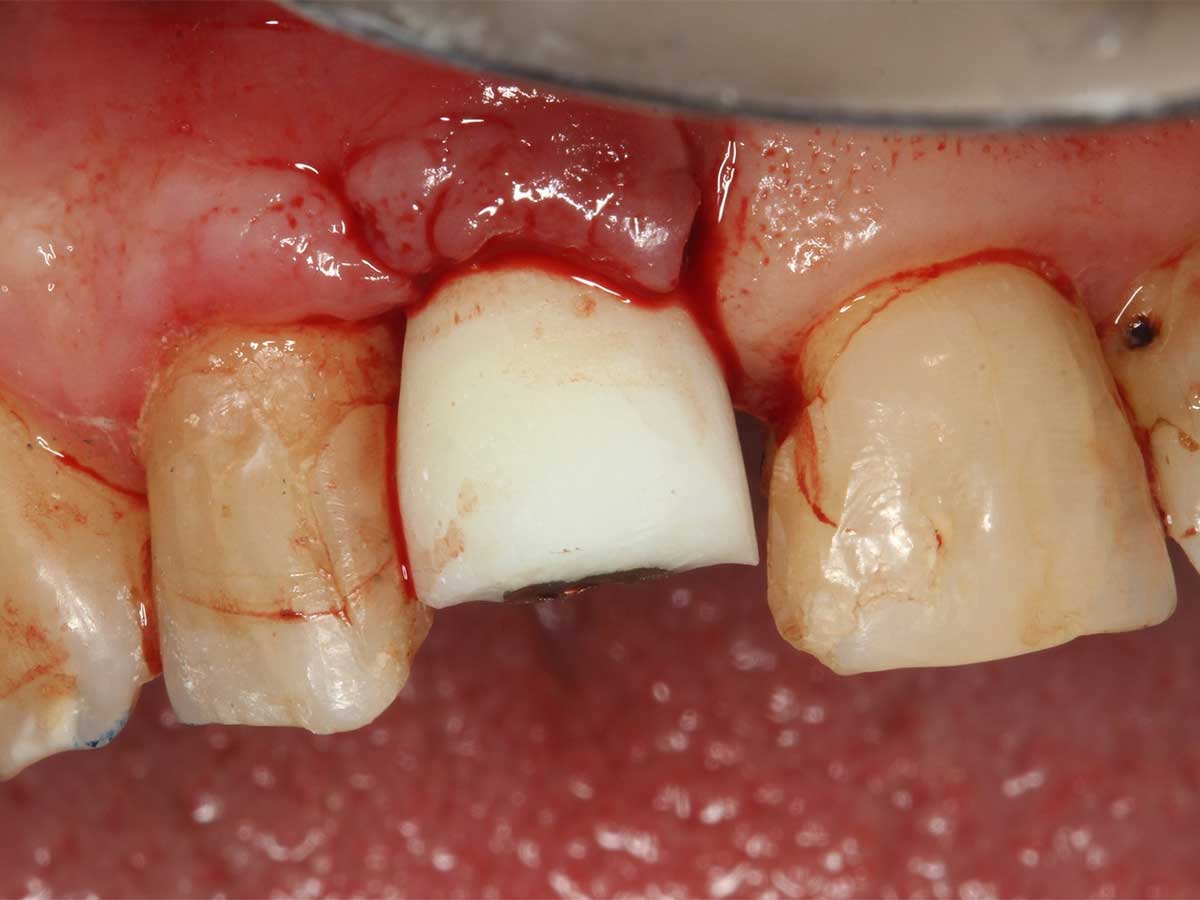
With composite, the healing abutment itself can become the provisional.
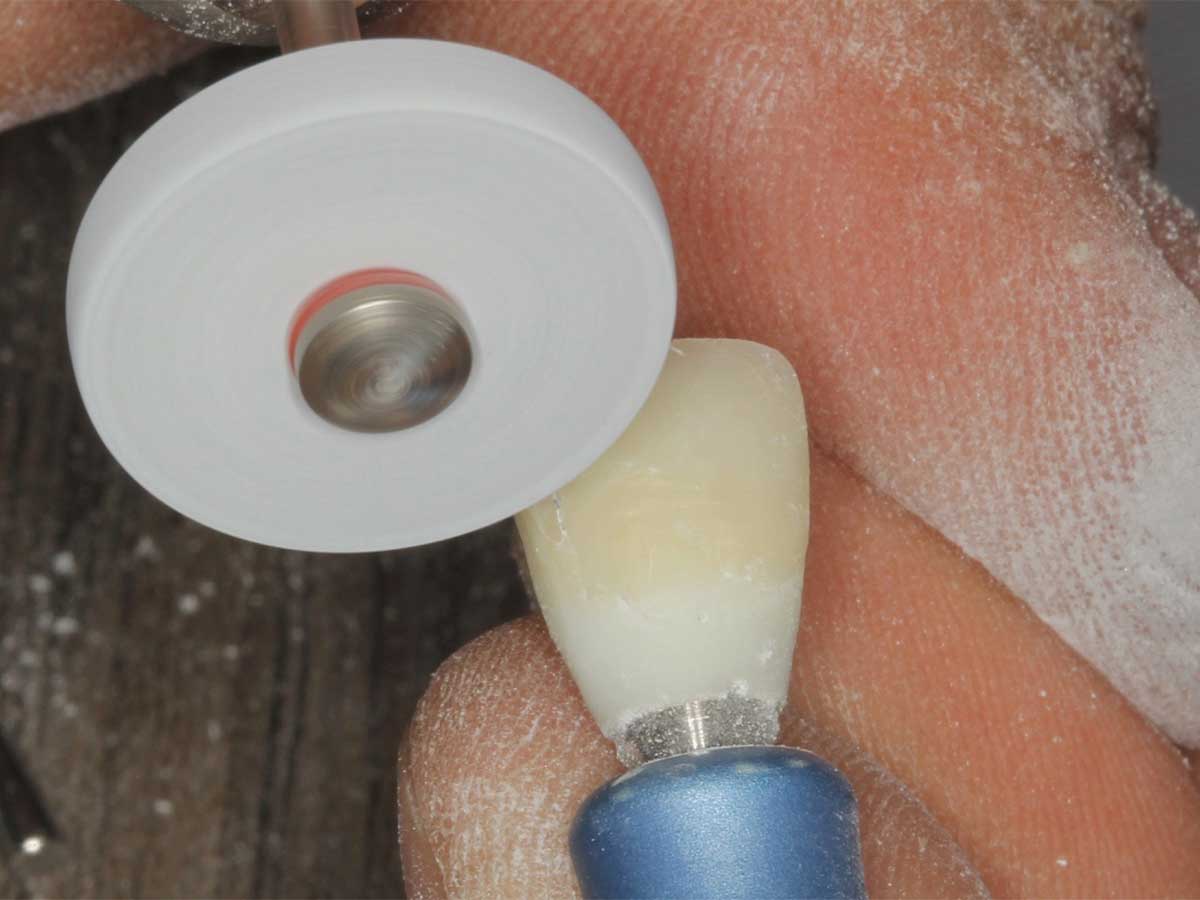
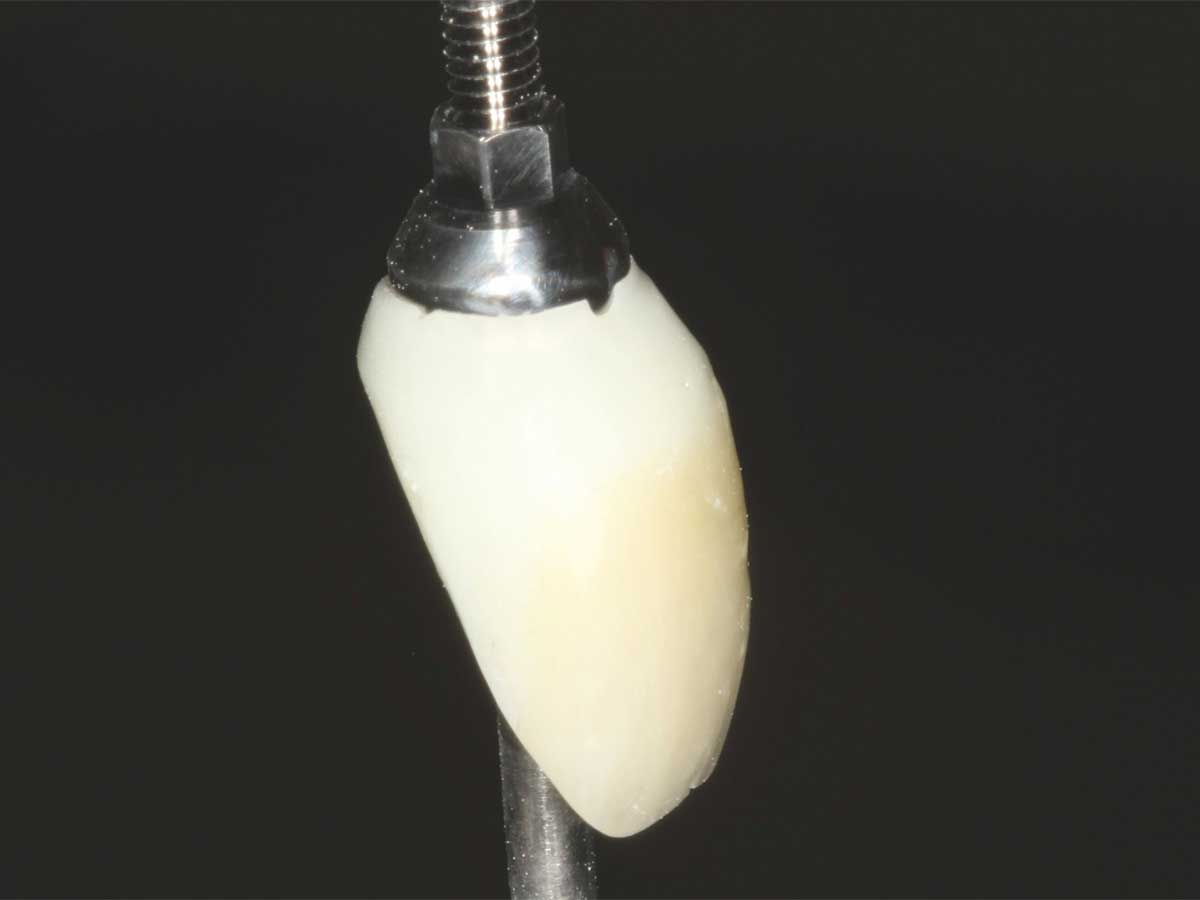
With Cervico: Directly modify the Cervico healer with composite to build it into a temporary prosthesis – chairside, in the same appointment. One component serves both functions: soft tissue shaping and provisionalization. No separate temp abutment, no lab time.






Eccentric implant placement
The implant isn’t always perfectly centered under the planned restoration. Bone anatomy, extraction socket morphology, or anatomical limitations may place the implant buccal, palatal, or off-axis relative to the ideal crown position.
A symmetrical pre-fabricated abutment produces an emergence profile centered on the implant – not on the restoration. The result is a misaligned contour that compromises both aesthetics and tissue architecture.
With Cervico: Use the off-set Cervico healers to compensate for implant misplacement, or move into a fully customised protocol – building up the deficient side and reducing the excess to shift the emergence profile where the restoration needs it. The abutment corrects for position so the tissue contour aligns with the final prosthesis.
Interproximal space while respecting papillae
Papillae preservation is one of the most demanding aspects of implant aesthetics. The interproximal contour of the abutment directly influences whether papillae fill in or recede – and mesial and distal requirements are rarely symmetrical.
A stock abutment applies the same contour on all sides. It can’t selectively support one papilla without compressing the other.
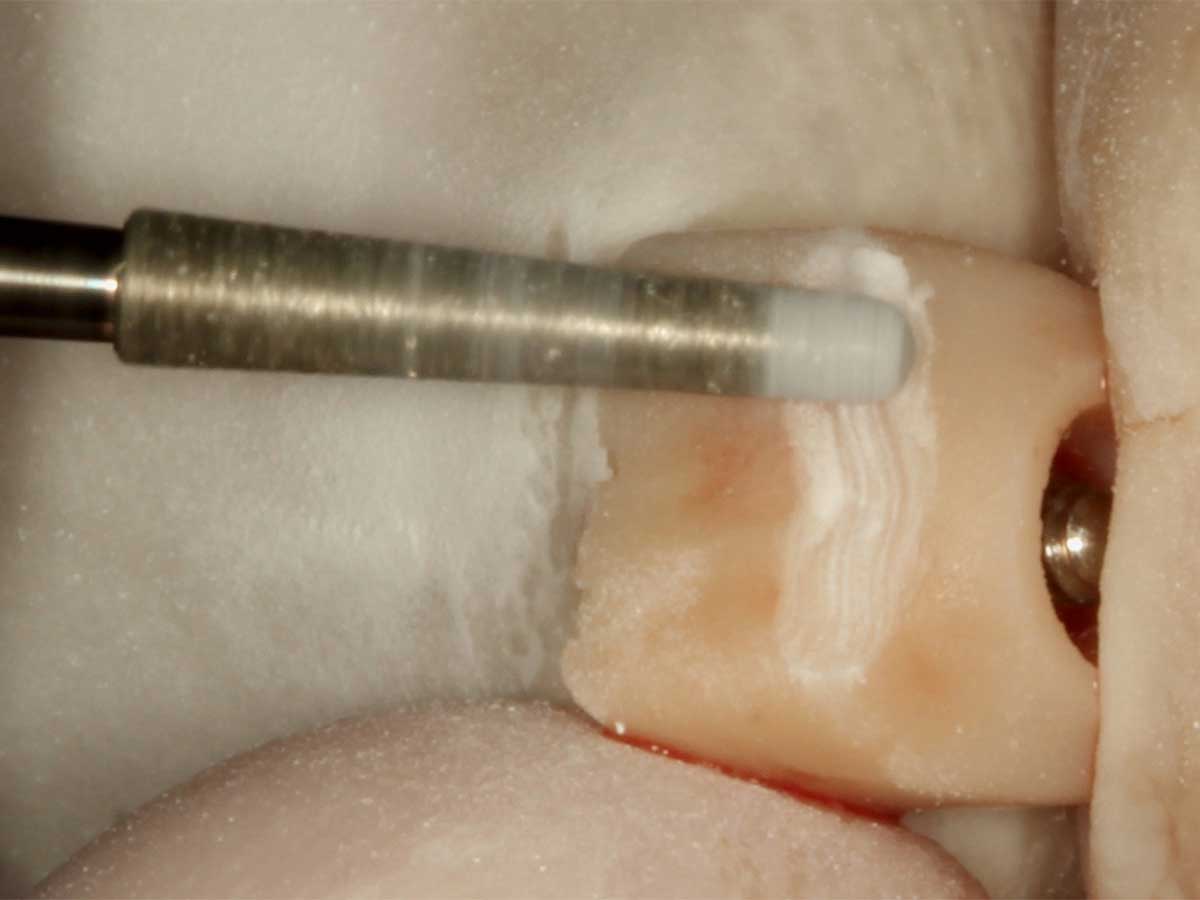
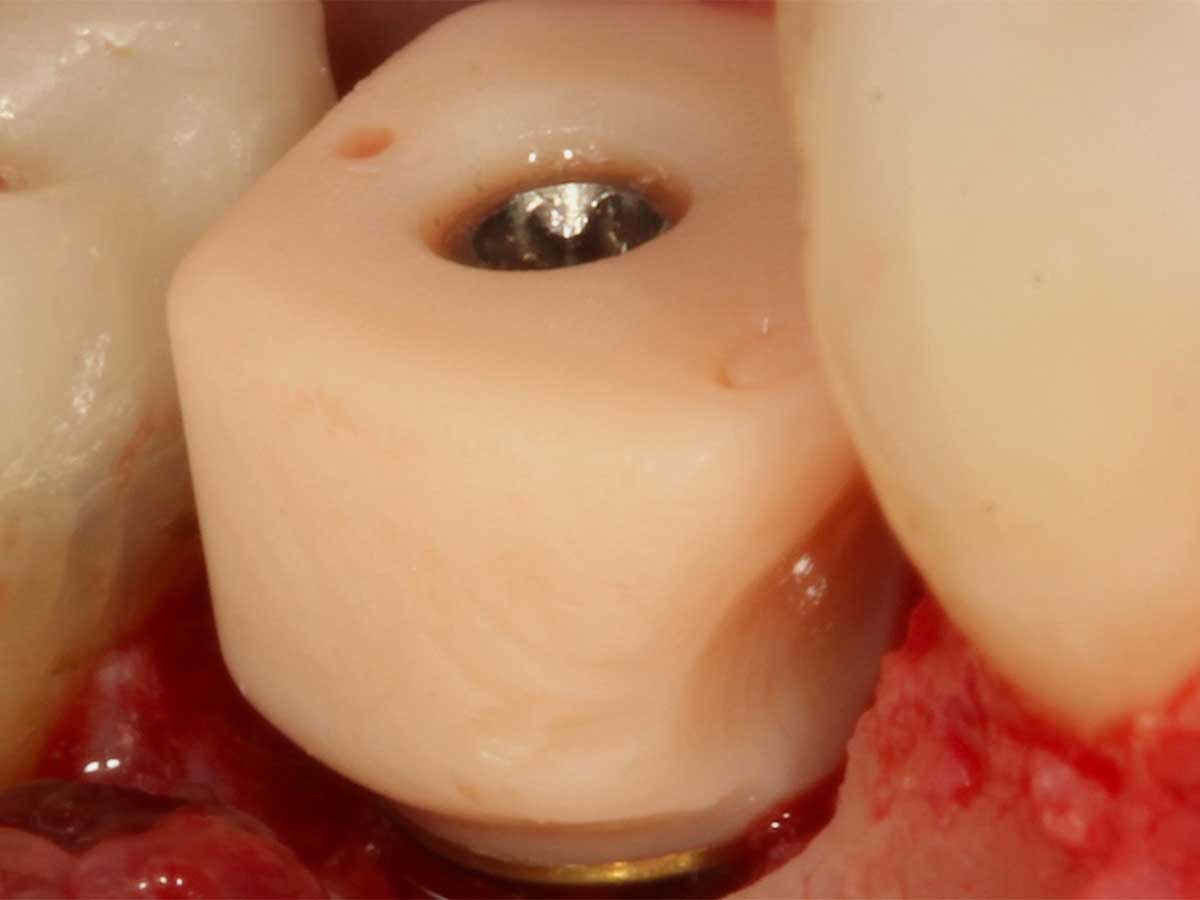
With Cervico: Fine-tune the mesial and distal profiles independently. Support each papilla according to the bone level, contact point distance, and tissue thickness on that specific side. The abutment respects the interproximal anatomy as it exists – not as a manufacturer assumed it would.


Adapting to implant position and soft tissue phenotype
Every case is a unique combination of implant depth, angulation, platform position, and soft tissue biotype. The ideal emergence profile for a deep-placed implant in thick tissue is completely different from a shallow-placed implant in thin tissue.
Pre-fabricated abutments offer one contour per size. They can’t account for the interplay between position and phenotype. And to avoid impinging on the papillae, you end up selecting a healer with inadequate buccolingual dimensions, compromising the final result.
With Cervico: The abutment adapts to all variables simultaneously. Adjust the subgingival contour for depth, modify the emergence angle for tissue thickness, and shape the profile for the specific platform position. All chairside, all in composite, all in one appointment.

Depth control across placement protocols
The deeper you go, the fewer options you have, and the more likely you are to compromise on contour because the right depth wasn’t in stock.
With Cervico: One system covers crestal, 1mm, 2mm, and 3mm subcrestal placement. The composite body is fabricated to the depth you need. No separate SKUs, no inventory gamble. Whether the implant sits at bone level or three millimetres below it, the abutment is built to match.
Every other healing abutment asks you to accept its shape.
Cervico asks the tissue what it needs.
Modifiable means adaptable
The Cervico System gives you an anatomical starting point and the freedom to adjust it to whatever the case demands. No compromises, no workarounds, no “close enough.”